
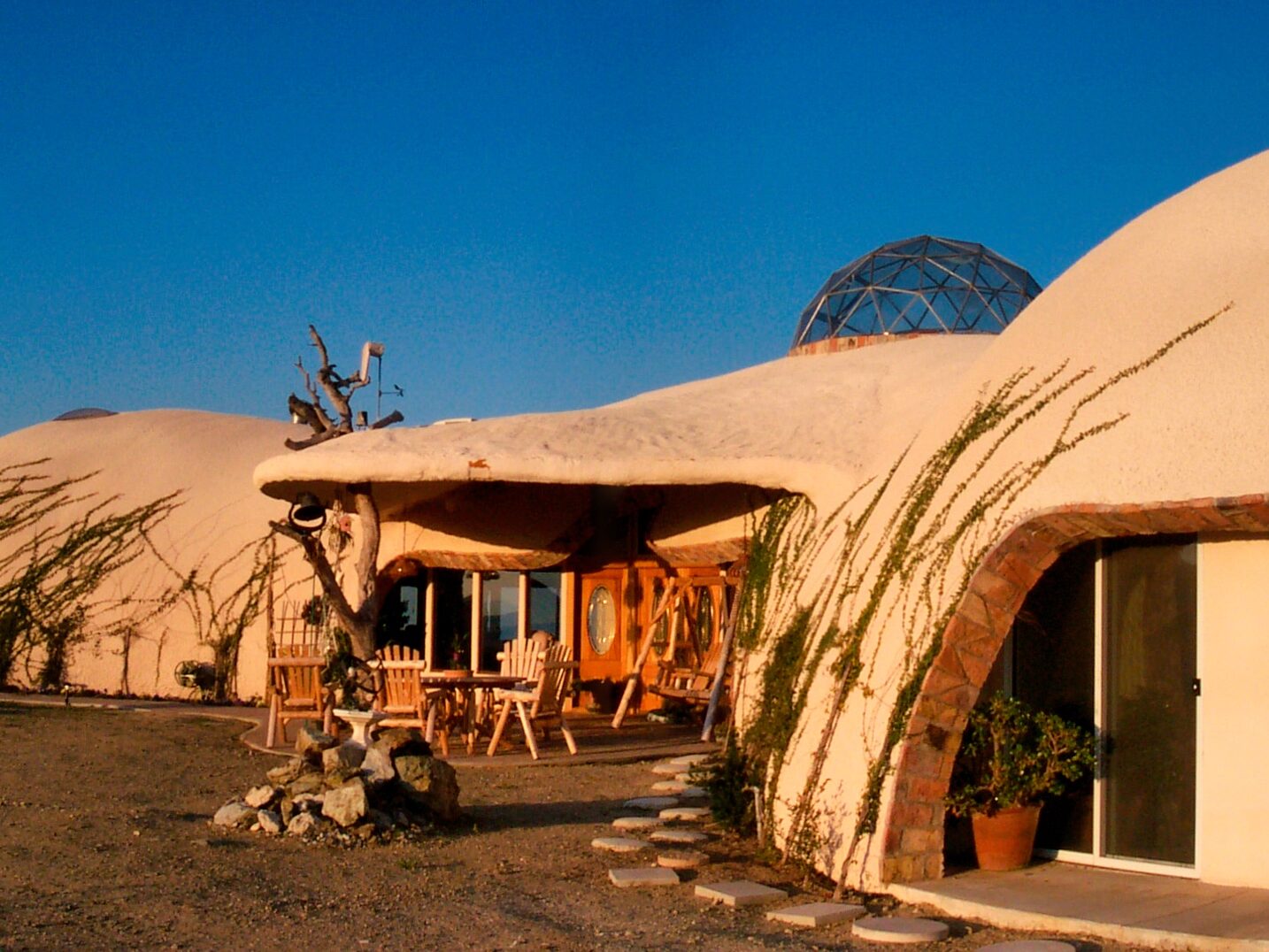
Many people are turning to what some may consider a more whimsical way of living as they become disillusioned with rising living costs. Somewhere between a tent and a house lives the yurt and for a growing number of people across the world, it’s the dream life they aspire to live. A fully livable yurt typically costs between $40,000 and $80,000+, depending on size, location, and off-grid setup requirements in the USA.
Anyone living through the current climate of today will feel the burden and stresses of modern, conventional living. Rising costs means that the dream of owning your own home may feel impossible, which is why many have turned to portable shelters. Living nomadically isn’t anything new, yurts have been a distinctive feature across Central Asia for at least two and a half thousand years and we are now seeing them come to life in North America.
If you’re wondering about the realities of what is on the other side of the dream, then that is exactly what this guide is for. It is very easy to get swept up in the idealistic pictures of yurts sitting prettily in dreamy locations but on the flip side when you have to consider permits, insulation and a budget which doesn’t stretch as far as it did 10 years ago, it may seem less dreamy to some.
This guide is packed with all the information you’ll need to make an informed decision, from pricing costs, manufacturer specifications, stories from real people and everything else in between.

What Is a Modern Yurt?
A traditional Mongolian yurt otherwise called a ger, is a circular, portable dwelling built from a wooden lattice wall, roof poles, and felt covering. The yurt has been refined over thousands of years and the bones of the design haven’t changed much because they didn’t need to. A traditional Mongolian ger uses a wooden lattice wall, roof poles and felt covering, and modern manufacturers have simply upgraded the materials. High-strength fabric covers, aircraft-cable tension systems and engineered dome rings now do the same job but built to meet contemporary load requirements [1]. Pacific Yurts for example use acrylic-coated polyester covers and aircraft-grade galvanised steel cables as standard [1] the engineering is quietly impressive when you look closely.
There is a reason the designs are still what we use today, they work and they don’t just work they are a marvellous piece of engineering. The core components are still recognizable: the lattice wall (khana) forms the circular perimeter, the roof poles (uni) radiate outward from a central crown ring, and that crown ring doubles as both the structural anchor and the yurt’s signature skylight. Not only do they represent being highly functional but also the ingenuity and adaptability of the amazing Nomadic people of Mongolia and Central Asia.
Today’s manufacturers Pacific Yurts, Rainier Outdoor, and Freedom Yurt-Cabins to name a few, offer models with insulated floors, double-pane windows, and snow load kits engineered for cold climates. If you are looking to meet residential building codes, bear in mind that these can vary significantly between locations. However, the engineering of today is fantastic and some modern day yurts can be designed to meet the relevant building codes. This means, even if you don’t think a yurt is feasible for you, it may be possible whilst meeting regulations
How Much Does It Cost to Live in a Yurt?
This is the point you really need to be serious about crunching numbers, please don’t see the cost of the yurt kit and get excited thinking “wowww, that is so cheap.” There is more to it and that’s why this guide has been created as a practical breakdown so you can make your decision with all the facts. You’ll need to add; a platform, insulation, heating, and any off-grid systems so by the time you have done all that, your set up costs might seem a little more frightening.
So let’s actually break this down properly because this is the bit that catches people out. These aren’t scare figures, they’re just the reality of what you’re working with:
Yurt kit (basic shell): $8,600–$19,500 for Pacific Yurts’ six standard sizes as of 2025, with fully loaded 30-foot models reaching $30,000–$40,000 [1]. Ranges vary by manufacturer.
Insulation: $2,000–$8,000 for year-round comfort, covering wall liners, roof insulation, and floor barrier [2]
Platform and foundation: $3,000–$7,000 for a basic platform; up to $14,000–$20,000 for a structurally insulated panel (SIP) system in cold climates [2]
Solar power system: $3,000–$10,000 for a basic off-grid setup [3]
Wood stove (heating): $2,000–$3,500+ for the unit plus installation. The Vermont Castings Intrepid FlexBurn is commonly recommended for small to mid-sized yurts retails around $2,700–$2,900 before installation [4]
All-in total: $40,000–$80,000+ for a fully livable off-grid yurt, depending on size, site conditions, and climate [2]
The numbers feel big until you compare them to a conventional mortgage. Then suddenly a yurt starts looking quite sensible.
Need a real world example to make those numbers feel more tangible? Whitney and Trent Newkirk built a 30-foot Pacific Yurts unit in California’s high desert for around $60,300 including solar, water and heating. Their Renogy solar setup a 4.4kW system with four lithium batteries and a backup generator which came in at just over $20,000. Whitney describes the result as seamless [3]. You can be inspired and read their story here.
HomeAdvisor puts the national average for building a yurt at $35,000, with most buyers landing somewhere between $18,500 and $53,000 which is a considerable difference in price. [2]. Cold climates drive costs toward the upper range. A yurt designed to handle Vermont or Montana winters comfortably will likely run $70,000 to $80,000 or more when fully outfitted [2]. That’s a significant range where you land depends almost entirely on your climate and how seriously you take the insulation from the start.
Insulation: The Part People Get Wrong
Ask anyone who has lived through a yurt winter with inadequate insulation and they’ll tell you get this right first time, as the saying goes: “do it nice, or do it twice.” Insulation tends to be where first-time yurt buyers underestimate the cost and overestimate the result. A basic canvas or felt yurt is comfortable in mild climates. A yurt you want to live in through a real winter, consistently and not just on a randomly lucky warm week is a different project.
Most manufacturers recommend a layered approach: rigid foam under the floor platform to prevent ground cold from transferring up, a radiant heat barrier in the walls, and a wool or synthetic liner across the roof. Common insulation costs per square foot range from $0.10–$1.00 for radiant heat barrier, $0.25–$0.50 for rigid foam, $0.30–$1.00 for batt and roll, and $0.50–$6.00 for spray foam [2]. According to the U.S. Department of Energy, insulation performance depends as much on proper installation and air sealing as on the material itself [5].
Long-term yurt dwellers in cold climates from cold-climate regions such as Vermont have reported successfully living year-round using wood stoves, mineral wool insulation, and SIP floors [2].The floor is consistently identified as the most critical thermal barrier and therefore should be an important budgeting factor.
How to Heat a Yurt (What Actually Works)
Heat behaves differently in a yurt than in a square room. The circular design and domed ceiling mean warmth rises directly toward the crown and escapes if your heat source isn’t positioned well. Experienced yurt owners often recommend placing the stove as close to the center as your layout allows, not along the wall [2].
The Vermont Castings Intrepid FlexBurn is one of the most frequently mentioned wood stoves in yurt communities for small to mid-sized spaces. It’s a compact cast iron unit, EPA-certified, with thermostatically controlled combustion. It retails around $2,700–$2,900 [4]. For larger yurts, Jøtul models are commonly cited. A mid-sized stove that fits your space tends to burn more efficiently overnight than oversizing.
Mini-split heat pumps can work effectively in cold climates modern cold-climate models operate well below 0°F according to the U.S. Department of Energy [6] but they require a solar system capable of running them, which adds $5,000–$10,000 to your solar budget [2]. Most yurt dwellers keep a propane heater as backup regardless of their primary heat source. It pays to be forward thinking and be prepared because an extra layer or an extra blanket won’t cut it when you’re living in a yurt in the winter without a comfortable heat source.
Solar Power for Yurts: How to Size It Right
Most off-grid yurts run on solar because they’re on land without grid access. A modest system handles the basics well. The catch is that energy loads tend to expand once you’re actually living there as a fan becomes a pump, a pump becomes a water heater, and suddenly your original system is working harder than planned.
Energy usage in a yurt varies widely depending on size, climate, and occupants. A rough planning baseline for a minimal off-grid setup LED lighting, device charging, a laptop, and a high-efficiency refrigerator is approximately 3–5 kWh per day [3]. A well pump, water heater, or mini-split will increase that significantly.
Because yurt roofs are circular and domed, roof-mounted panels are not practical for most models. Ground-mounted arrays are the most common approach [3]. Size your system for winter sun hours at your specific latitude not peak summer output. Northern climates need to account for shorter days and lower sun angles, which is something many people tend to overlook!
The Newkirk build mentioned earlier used a Renogy 4.4kW system with four lithium batteries. Renogy is widely used in the DIY off-grid community partly because the company provides YouTube tutorials and pre-configured kits aimed at first-time buyers [3]. For first timers, Renogy’s own YouTube tutorials take a lot of the mystery out of the setup process which is exactly what you need when you’re staring at a field full of solar panels wondering where to start.
The Practical Reality: Permits, Costs, and Size
When considering your Permit, you need to understand that rules for yurts can vary more than you may expect. Whilst some counties consider them a temporary structure, others do not and in some cases occupancy can be limited. There is no national standard so it is important to do your research. Before you buy land or a kit, call your county planning department and ask specifically about permanent occupancy of non-standard structures. This call can save you significant money and time. Practically speaking, make sure you take notes as you don’t want to feel overwhelmed and forget important information.
One of the deciding factors for a lot of people are property taxes. These tend to be a lot lower on a yurt in comparison to a standard home which is obviously enticing. If you take your time with your project and do it properly, then you can even live with extremely low utility costs. Ultimately, when your biggest cost is your insurance, it certainly becomes ultra appealing and who doesn’t want more cash to do the things they love?
Size is certainly important but you can get Pacific Yurts 30ft model which covers approximately 706 square feet which is similar to the average New York apartment! That size can function for a family of four depending on layout and lifestyle, though many households may find it tight for long-term use. A 40-foot yurt offers significantly more space but also significantly higher heating and insulation costs.
Is It Right for You?
Yurt living suits a specific kind of person. Not an idealized version the actual kind: someone who is comfortable troubleshooting, genuinely interested in self-sufficiency, and willing to trade some convenience for something that feels more grounded. That’s not everyone, and it doesn’t need to be. In regards to sizing and the amount of people living in it you need to consider factors such as hobbies as if you enjoy knitting for example then space isn’t going to be an issue but if you’re a pianist for example – is this going to be something you need to sacrifice?
If you’re drawn to the idea but not sure it’s really for you, the best thing to do is visit someone who actually lives in one not a glamping setup, but a full-time home. The gap between the photographs and the day-to-day is smaller than the skeptics suggest and more honest than the enthusiasts admit. It is something you can never really fully understand until you immerse yourself in it. Perhaps you spent 2 weeks staying in one for a holiday and you thought “now this is the life” just remember that the reality versus the dream doesn’t always marry up.
Whilst I believe in living life to the fullest and in the motto “I’d rather regret what I did do rather than what I didn’t do” a big life decision does require planning and thought. Create a pros and cons list, weigh everything up. Take notes on planning. Price everything up for the worst case scenario and the best case as political changes can drastically affect costings in the blink of an eye.
So, for those who do the homework the permit calls, the budget stress-testing, the climate research a yurt is a genuinely viable way to live. The numbers are real, the tradeoffs are manageable, and for the right person on the right piece of land, it can be the most sensible thing in the world.
References
[1] Pacific Yurts. “How Much Does a Yurt Cost?” & “Standard & Custom Features.” September 2024. https://www.yurts.com/customer-support/how-much-does-a-yurt-cost
[2] HomeAdvisor / Angi. “How Much Does It Cost to Build a Yurt? [2025 Data].”https://www.homeadvisor.com/cost/outbuildings/build-a-yurt
[3] Green Builder Media. “How One Couple Built an Off-Grid Yurt Life for Under $60,000.”https://www.greenbuildermedia.com/blog/how-one-couple-built-an-off-grid-yurt-life-for-under-65000
[4] Vermont Castings / La Crosse Fireplace Co. “Intrepid FlexBurn Wood-Burning Stove.”https://www.lacrossefireplace.com/product/vermont-castings-intrepid-wood-stove
[5] U.S. Department of Energy. “Insulation.” Energy Saver. https://www.energy.gov/energysaver/insulation
[6] U.S. Department of Energy. “Heat Pump Systems.” Energy Saver. https://www.energy.gov/energysaver/heat-pump-systems
Credits: Featured Image by David Collins / Monolithic Commons / CC BY 4.0